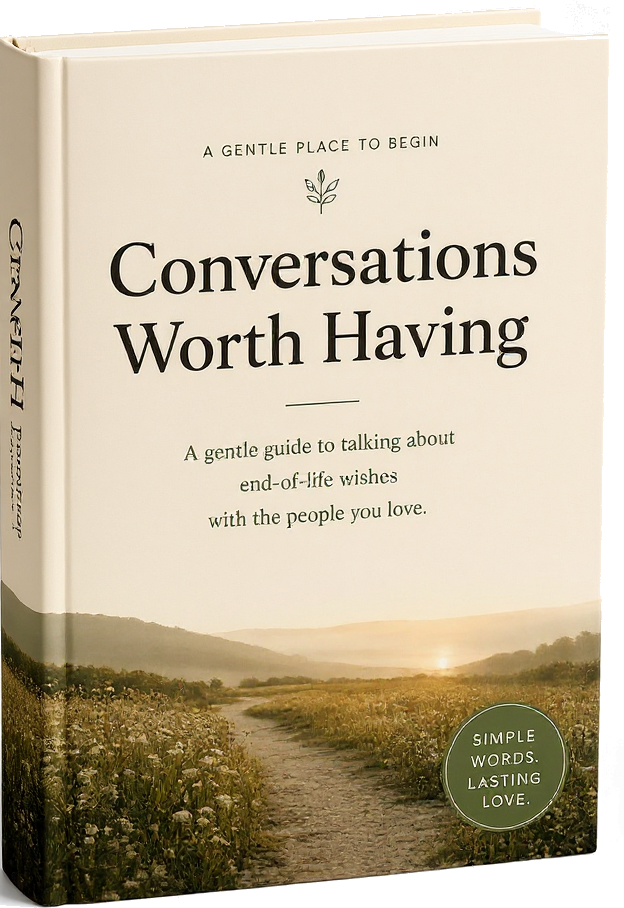

The hardest part of talking about death is starting. Once the words are out, most families feel lighter, not heavier. You stop carrying the unknown alone.
You do not need the perfect moment or the perfect words. You need a little courage and a quiet hour. Here is how to begin.
Pick a calm time, not a crisis
The best time to talk is when no one is sick or scared. Over coffee, on a walk, or in the car where you do not have to hold eye contact. A relaxed setting takes the pressure off.
If a health scare has already happened, that is okay too. It often makes the talk feel more honest. Just go slowly.
Use a soft opener
You do not have to announce a Big Talk. Try a simple way in:
- “I have been thinking about what I would want one day, and I want you to know.”
- “Can I ask how you would want things handled, while we have the time?”
- “I read something about planning ahead, and it made me want to talk with you.”
Each of these gives the other person room to step in or wait. There is no pressure to decide anything today.
Listen more than you talk
This is not the moment to fix or argue. It is the moment to learn what matters to the person in front of you. Ask what a good day looks like to them. Ask what they would not want.
When you really listen, people tell you more than you expected. Write down what you hear, so you remember it later.
You can stop and come back
One talk does not have to settle everything. If tears come, that is okay. If someone needs to stop, stop. You can pick it up another day. Most families have this conversation in small pieces, over months.
What matters is that you started. Each talk makes the next one easier, and it gives the people you love the gift of knowing your heart.
If you would like a hand getting started, that is exactly the kind of thing I help families with. You do not have to do this alone.